How it works
The head: a cap over the knob you already use
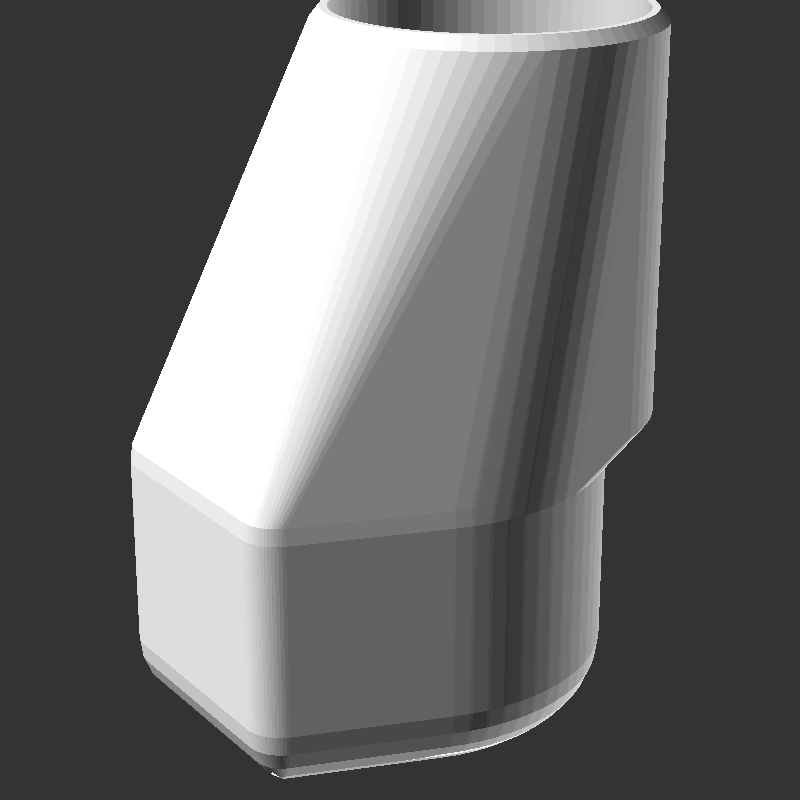
The tilt control of an inter-pane blind is a small fluted knob on a thin flexible shaft. BlindBot's head is a printed cup whose TPU liner drops into those flutes. You push it up over the knob from below; a small key on the housing collar slides into the fork of a clip-on rail held by the existing rod guide clip (two printed pieces that snap together around the rod, both fitted from the room side), so the reaction torque is carried by the frame. See it in the 3D model (try the exploded view).
Torque safety, in layers
- Mechanical clutch: an O-ring slips just above the blind's running torque.
- Slow, gentle moves: the default ULN2003A drive has no current limit, so it runs slowly (3 rpm, homing 2 rpm) and the clutch is the torque limit. The quiet TMC2209 option adds firmware current limits.
- Soft end stops: motion is clamped just inside the calibrated hard stops.
- Push-fit release: pull the head off by hand at any time — that is the manual override.
One controller, two heads
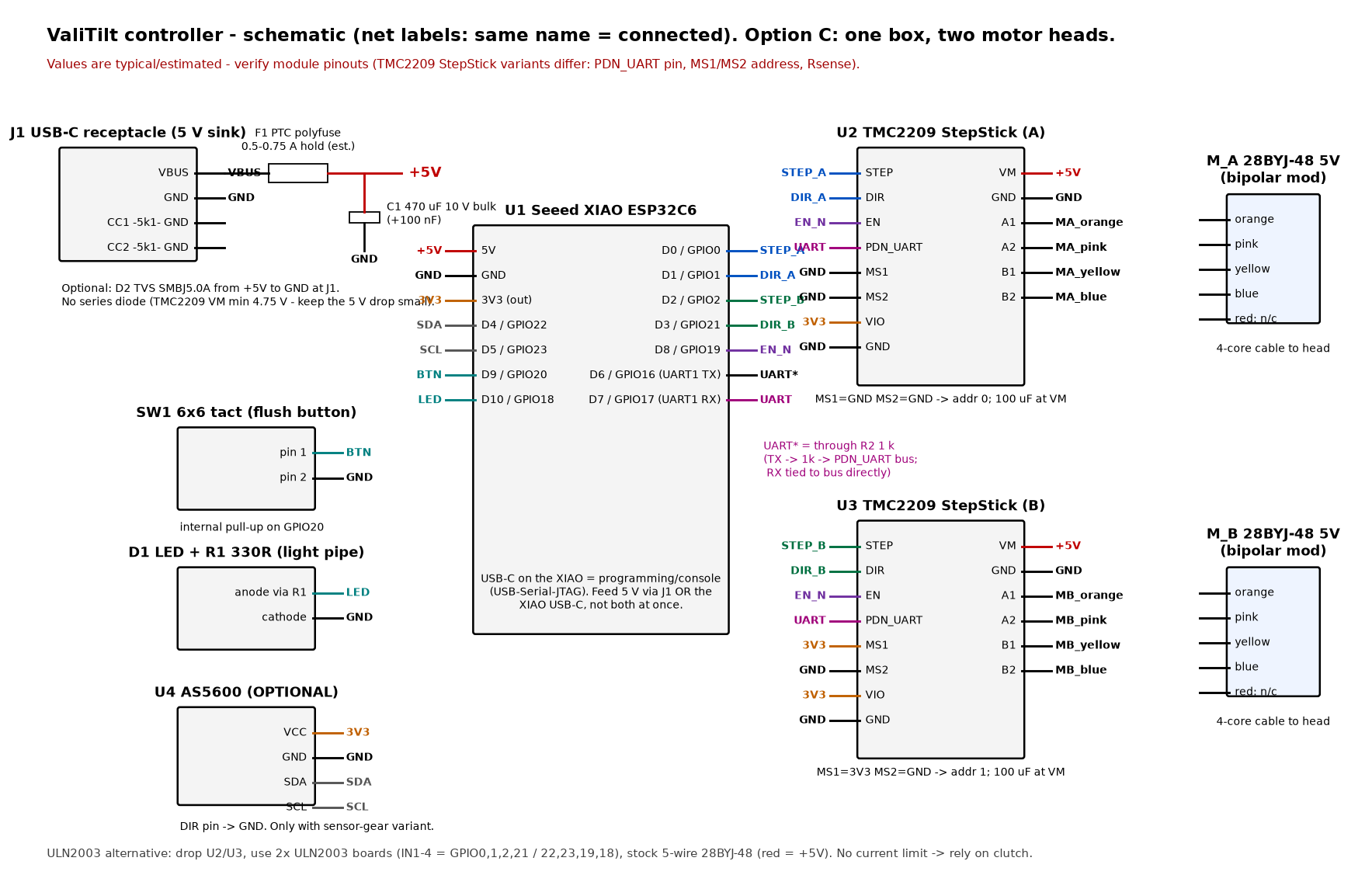
A pocket-size box (Seeed XIAO ESP32C6 + two ULN2003A drivers, stock 5-wire 28BYJ-48 motors) hides low behind a curtain. Thin white 6-wire flat cable runs up the frame edge to each head. The firmware serializes moves so both blinds never run at once. Two TMC2209 drivers remain a quieter option. Pin maps and wiring: electronics.
Position without sensors
A geared stepper driven slowly under light load does not lose steps. A guided calibration records the two hard stops and the horizontal position. After anyone turns the knob by hand (the clutch slips), one button press re-homes gently into the closed-up stop.
Matter tilt mapping
The controller exposes itself as a Window Covering device with tilt and position-aware tilt — no lift. 0 % = slats horizontal (open); 100 % = closed in your preferred direction. Each sash is its own tile. Control is local to your home network after the first commissioning.
Power options
Version A, USB-C. The controller runs on a 5 V USB-C supply that stays plugged in.
Version B, battery + USB-C. A 2000 mAh LiPo in the box, charged over USB-C. Estimated about 4 months per charge at 2 blinds × 4 moves a day (estimate; it depends on the motor coil resistance, which is not measured yet).
Version C, battery + solar + USB-C. As B, plus a 12 V 1.5 W panel in a flat pack that stands between the panes. The motor rail is powered off between moves and the node sleeps as a Thread sleepy end device. Details: power budget.
Sunlight data from PVGIS (European Commission, Joint Research Centre). For background on how existing window-tilt devices power themselves, we cite public product pages and public regulatory filings (e.g. FCC filings) — linked, never reproduced — and we are not affiliated with, endorsed by, or claiming compatibility with any of them.